
![final-logo[1]](https://rhythmcareltd.com/wp-content/uploads/elementor/thumbs/final-logo1-scaled-e1746056972397-scaled-rr5o1jx1877ttpn76a443m8oio2xtozuvfpvuvma84.png "final-logo[1]")

Exercise After Pacemaker Surgery: Safe Workouts Approved by Cardiologists
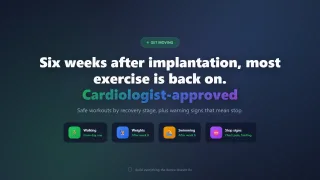
The most common fear we hear from newly implanted Patients in Dhaka is some version of this: “I don’t want to move wrong and pull out the wires.” The second most common is its opposite: “When can I get back to the gym?”
Both come from not knowing what the first weeks actually require. So here’s the honest picture: your Pacemaker leads are secure within a few weeks of Implantation, and after that, exercise isn’t just allowed. For most pacemaker patients it’s one of the best things you can do for your heart.
The healing timeline
Weeks 0 to 2: The incision closes and the leads begin bonding with the heart tissue. Keep the arm on the implant side below shoulder height. No lifting anything heavier than about 5 kg, which rules out shopping bags, grandchildren, and heavy pots. Walking around the house is encouraged from day one; gentle movement prevents clots and speeds recovery.
Weeks 2 to 4: Normal arm use returns gradually. You can raise the arm, dress normally, cook, type. Still avoid forceful pulling, pushing, or reaching hard overhead. Most cardiologists clear driving somewhere around here.
Weeks 4 to 6: The leads are typically well anchored by now (your follow-up check confirms it). Swimming and vigorous overhead activity can usually resume at the six-week mark.
After week 6: Essentially unrestricted. Weight training, cycling, football, badminton, all back on the table unless you have another cardiac condition that limits you separately.
One exception to memorize: contact sports carry a direct risk to the device pocket. Competitive kabaddi, boxing, or martial arts deserve a specific conversation with your cardiologist, including chest padding options.
What exercise does for pacemaker patients
A pacemaker fixes slow electrical Rhythms. It doesn’t fix fitness, blood pressure, weight, or cholesterol, and most people who need a pacemaker also benefit enormously from conditioning. Regular aerobic exercise after implantation improves walking distance, sleep quality, mood, and blood pressure control. Studies of cardiac rehabilitation consistently show fitter patients do better over the following decade than sedentary ones, pacemaker or no pacemaker.
There’s also a practical point: your device only helps when your heart needs pacing. A stronger, healthier heart often paces less, which paradoxically extends battery life.
Safe workouts, by stage
Early recovery (weeks 1 to 4)
- Indoor walking, starting at 10 to 15 minutes twice daily and building steadily
- Deep breathing exercises, five minutes several times a day, useful for lung expansion and calm
- Gentle range-of-motion movements for the non-implant side
Stop any session if you feel incision pain (not just soreness), dizziness, or palpitations, and mention it at your next check.
Rebuilding (weeks 4 to 8)
- Brisk outdoor walking, 30 to 45 minutes most days. Ramna Park at dawn exists for exactly this.
- Stationary cycling on level resistance
- Light household activity, carrying moderate loads close to the body rather than at arm’s length
Full return (after 8 weeks)
- Aerobic work 150 minutes per week: brisk walking, jogging if already practiced, cycling, swimming, or treadmill. This is the standard target for heart health.
- Resistance training two days per week. Start light, higher repetitions before heavy weights. Avoid holding your breath during lifts (the Valsalva maneuver), since straining spikes blood pressure; exhale on effort instead.
- Bangladesh favorites are fine: badminton, cricket (batting and fielding; be sensible about diving in the first months), football at recreational intensity.
When your pacemaker is set to a specific limit
Some patients are programmed with an upper heart rate cap, either because of a rhythm condition or as a safety setting after a heart attack. If yours has one, your cardiologist will tell you the number, and hard sprint intervals that push past it will simply leave you feeling capped rather than harmed. Ask at your programming visit whether your settings affect training, especially if you’re targeting competitive sport.
Patients with additional conditions, heart failure, recent infarct, severe valve disease, should follow a structured cardiac rehab program rather than self-directing. That’s not caution for its own sake; supervised programs get better results for exactly this group.
Warning signs that mean stop and call
Exercise should never produce:
- Chest pain or pressure
- Fainting or near-fainting
- Palpitations that feel different from your normal pattern
- Pain, swelling, redness, or opening at the incision site
- Persistent hiccups or twitching in the chest or diaphragm area (this can signal lead stimulation and needs reprogramming)
Any of these earns a same-day call to your cardiology team. None of them should be waited out.
Devices and monitoring while training
Fitness trackers and smartwatches are fine to wear; the optical heart-rate sensors on the wrist read reliably even when the pacemaker is pacing. Just keep them off the implant side if they press directly on the pocket. Chest-strap heart rate monitors are also safe but sit closer to the device, so wear them slightly lower than usual.
If you train with data, note that some watches under-read heart rates during paced beats. How you feel remains the more trustworthy gauge on hard efforts.
The mindset shift
Before the implant, many patients spent months moving carefully, afraid of their own hearts. After it, the calculation flips: the device protects the slow-rhythm problem, and your job becomes building everything else. Six months from surgery, the typical patient who trains regularly is doing more physically than they managed in the year before diagnosis.
Start slower than feels necessary in month one, progress every week, and let your follow-up checks confirm what you’re feeling.
Rhythm Care Ltd advises pacemaker patients on individualized activity plans based on their device settings and underlying condition. If you want an exercise plan matched to your actual device programming rather than generic internet advice, book a consultation or call +880 1819-227038.
FAQ
Can I lift weights with a pacemaker?
Yes, after about 6 weeks of healing. Begin with lighter loads and higher reps, avoid breath-holding during lifts, and skip exercises that put direct pressure on the device pocket until it’s fully healed and comfortable.
Does exercise drain my pacemaker battery faster?
Barely. Pacing demand depends mostly on your underlying rhythm and device settings. Fitter hearts often pace less overall, which helps longevity.
Can I play football or cricket again?
Non-contact versions without restrictions after healing. For genuinely rough contact sport, discuss protective measures with your cardiologist first, since a direct blow to the pocket can damage the device.

Neurosoft





Leave a Comment