


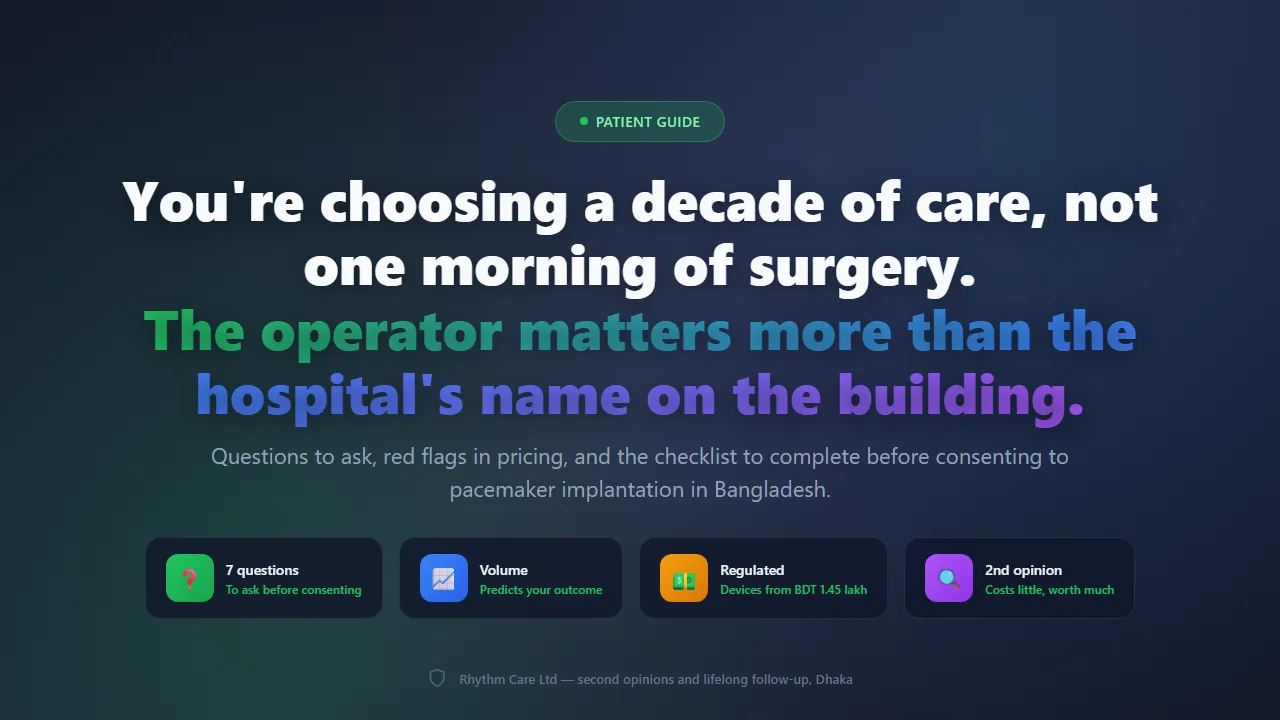
A pacemaker implantation is, technically, a routine procedure. Done thousands of times a day worldwide, usually under local anesthesia, home the next morning. But “routine” only applies when the right hands do it, and in Bangladesh the variation between implanters is wider than most patients realize. The device itself is government-regulated and identical wherever you buy it; what you’re actually choosing when you pick a cardiologist is the quality of the decision-making before, the skill during, and the care for the decade after.
This guide walks through how to make that choice deliberately instead of defaulting to whoever your family knows or whichever hospital has the biggest advertisement.
First, confirm you need the right kind of specialist
Pacemaker implantation sits within cardiac rhythm management, a subspecialty of cardiology. General cardiologists are excellent at many things, but device implantation rewards operators who do it constantly. When you’re evaluating doctors, prioritize:
- A cardiologist with formal electrophysiology or device training, not just an MD in cardiology.
- High annual implant volume. Evidence across procedures is consistent: operators who perform a procedure frequently have fewer complications. Ask for a number; 50 or more implants a year is a reasonable benchmark.
- Familiarity with current techniques, such as left bundle branch area pacing, which indicates ongoing education even if your case uses a conventional approach.
Also verify the decision itself. A good cardiologist confirms the indication with objective evidence: documented ECG findings, Holter data showing pauses or block, symptom correlation. If someone proposes implanting a device based on a single clinic ECG without correlating your symptoms, get a second opinion. Conversely, if you’ve been fainting repeatedly and no one has ordered a Holter, that’s a problem in the other direction. Both errors happen here regularly.
Questions to ask at the consultation
Bring a list. Serious specialists expect it, and their answers tell you more than any brochure:
- What exactly is my diagnosis, and which test showed it? You want the specific rhythm diagnosis and the evidence behind it.
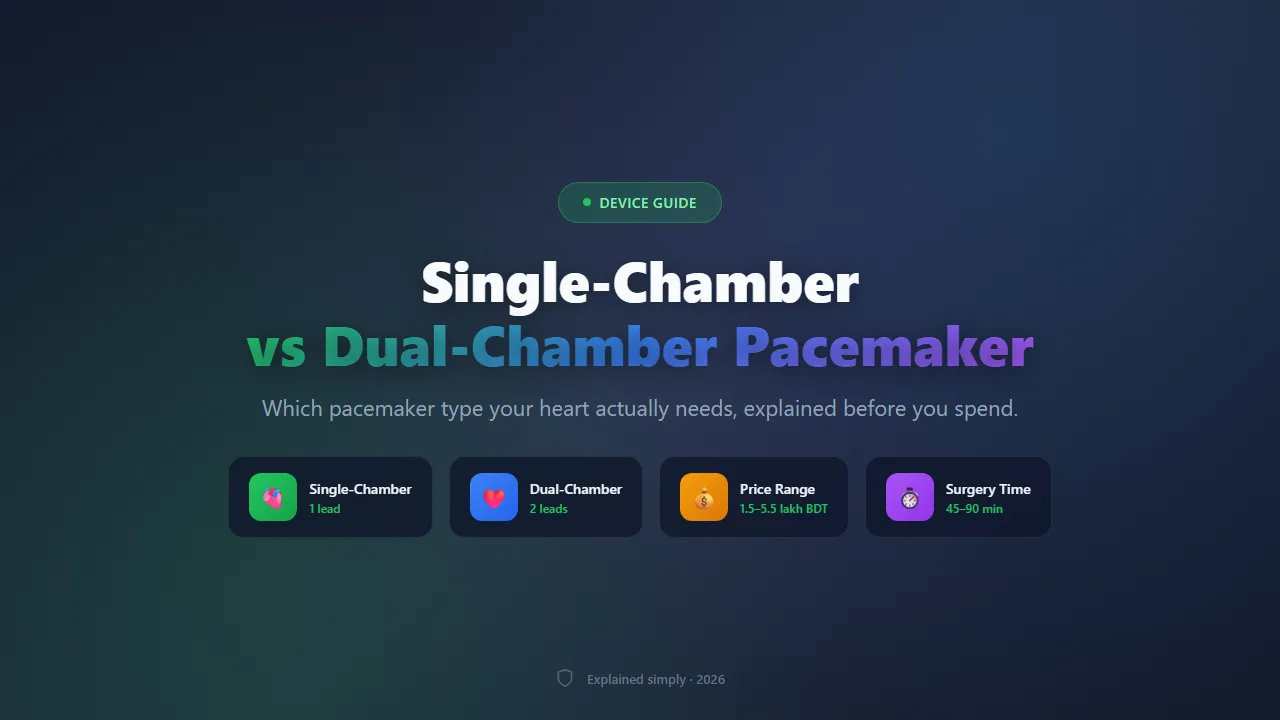
- Which device do you recommend and why? Single versus dual chamber, which manufacturer, which model. The answer should reference your specific anatomy and rhythm problem, not habit.
- How many of these have you implanted this year? What is your complication rate? Lead dislodgement, infection, pneumothorax rates. A confident answer with real numbers is reassuring; vagueness is not.
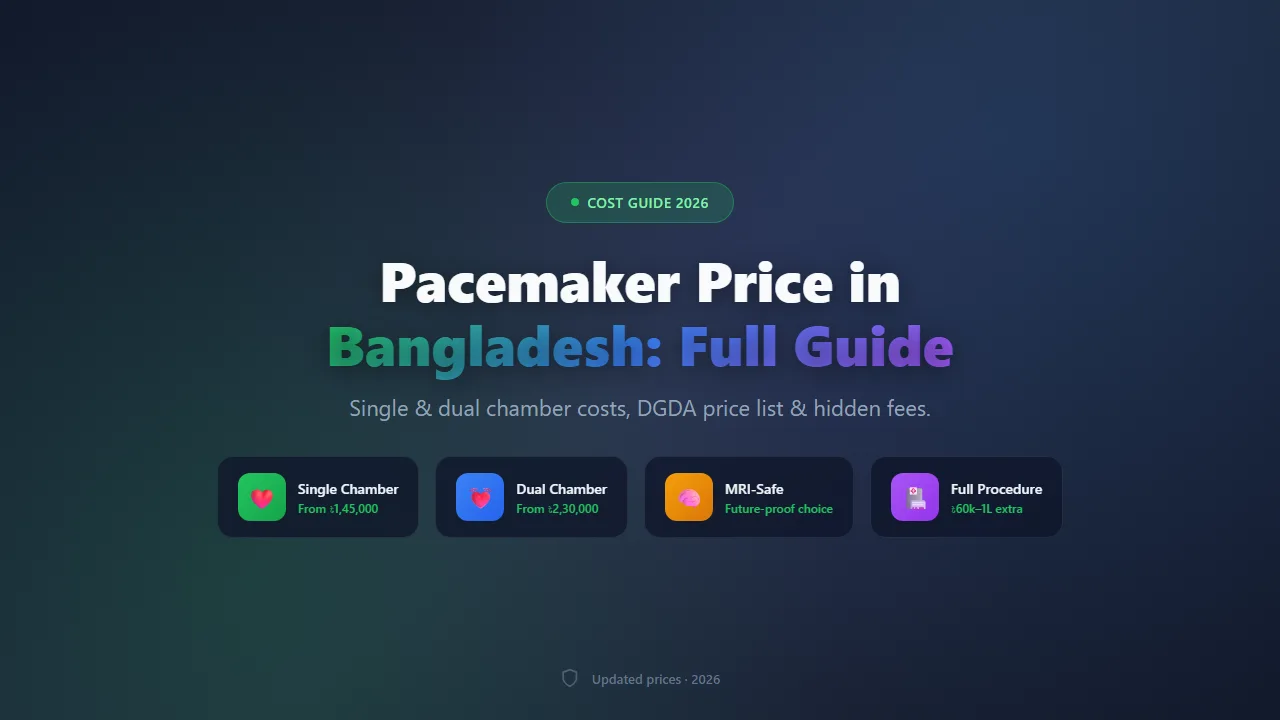
- Where will the procedure happen, and what is the total cost? You want an itemized estimate: device price per the DGDA list, procedure fee, hospital nights, tests. Our pacemaker price guide lists regulated device prices, from around BDT 1,45,000 for single-chamber Abbott units to BDT 2,30,000 to 3,35,000 for dual-chamber, so you can sanity-check any quote you’re given.
- What happens after discharge? Who does the wound check, when is the first device check, is remote monitoring offered?
- What if something goes wrong at night or after I’ve gone home to Rajshahi? Emergency accessibility matters more than patients expect.
Notice that none of these questions are about the brand name of the hospital. That’s deliberate.
Reading through the pricing fog
Because device prices are regulated, an honest quote should track the DGDA list closely. Red flags in pricing discussions:
- A “package price” that doesn’t specify the device model in writing.
- Pressure to choose a more expensive device without a clinical reason tied to your condition.
- No written estimate at all.
- Follow-up costs mentioned only after you ask twice.
A fair all-in figure for a single-chamber system in Dhaka runs about BDT 2,00,000 to 2,50,000, dual-chamber roughly BDT 3,00,000 to 4,00,000, depending on hospital and stay category. If a quote lands wildly outside these bands in either direction, ask why in writing.
The part everyone forgets: the decade after
Your cardiologist choice is really a choice about long-term care. Devices need checks every 3 to 12 months depending on type and age, battery replacement around year 8 to 12, and occasional lead management over a lifetime. Before committing, establish:
- Whether the doctor personally follows their patients or hands them off after implantation.
- Whether the center offers remote monitoring, which lets your device transmit data over mobile networks so most checks happen without traveling to Dhaka. For patients outside the capital this is the difference between consistent follow-up and none.
- Whether they service devices implanted by other doctors. Willingness to take over someone else’s patients suggests a genuine follow-up practice rather than an implant mill.
We say this plainly at Rhythm Care: patients who stay in structured follow-up have better outcomes than patients who disappear after implantation, and the difference is large enough that follow-up quality should weigh as heavily as surgical skill when you choose.
Second opinions are normal
In Bangladeshi medical culture, seeking a second opinion is sometimes read as distrust. It shouldn’t be. Any implant is a lifelong commitment with real cost, and a second opinion costs a consultation fee, a few thousand taka at most. Reasonable situations where it’s clearly worth it:
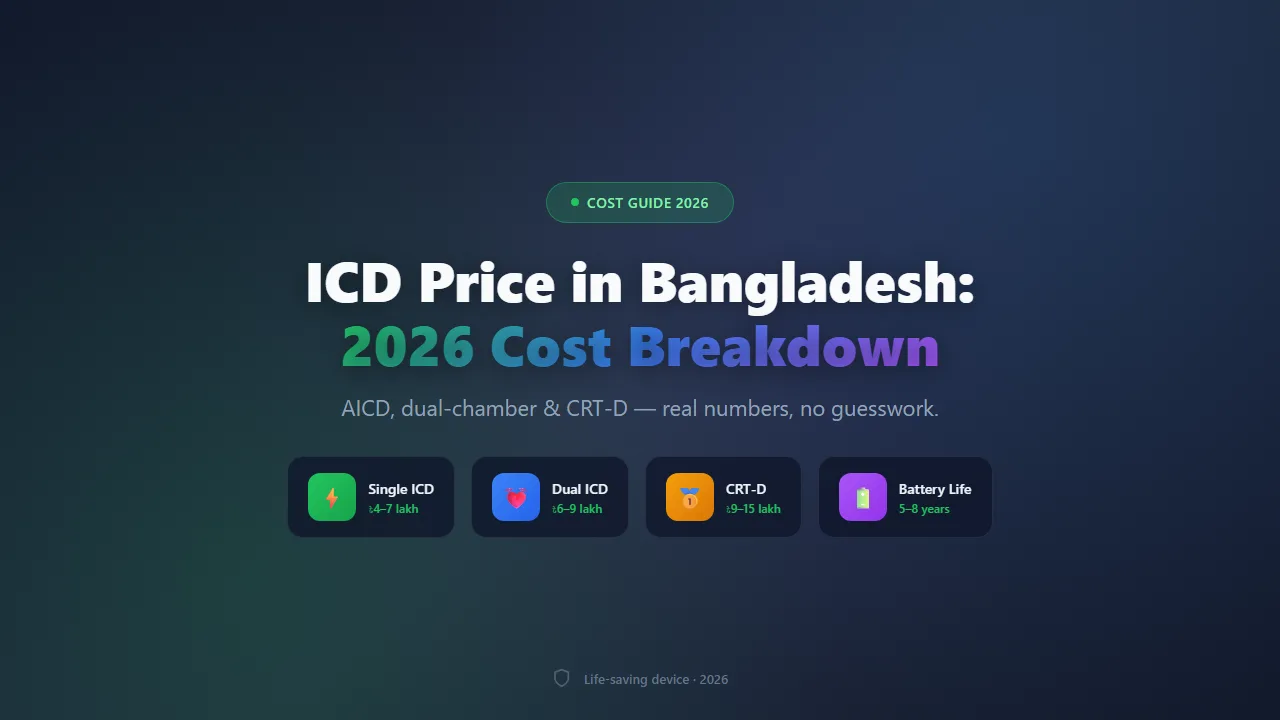
- An ICD recommendation, since defibrillators are a bigger commitment and cost several lakh taka more than pacemakers.
- Any recommendation made without objective rhythm documentation.
- Conflicting advice from two doctors you’ve already seen.
- A young patient (under 50) facing decades with a device, where technique choices like conduction system pacing deserve discussion.
If a cardiologist reacts angrily to your mention of a second opinion, that reaction is itself your answer about them.
Practical checklist before you consent
- Diagnosis documented in writing with the supporting test results
- Device model and manufacturer written into the estimate
- Itemized cost breakdown matching DGDA device prices
- Implanter volume and complication history asked and answered
- Follow-up schedule for the first year, with remote monitoring discussed
- Emergency contact pathway established
- Wound care instructions and first device check date before discharge
If all ten boxes tick, you’ve chosen well regardless of which hospital’s name is on the building.
How we can help
Rhythm Care Ltd is an authorized service provider for Abbott cardiac rhythm devices in Bangladesh, based in Kawran Bazar, Dhaka. We help patients evaluate device recommendations before surgery, connect with experienced high-volume implanters, and then provide lifelong follow-up with remote monitoring so distance from Dhaka never becomes a gap in care. If you’ve received a pacemaker recommendation and want it reviewed honestly, bring your ECG, Holter, and echo reports. Book an appointment or call +880 1819-227038.
Frequently asked questions
Should I choose the most famous hospital or the most experienced doctor?
The operator matters more than the building. A high-volume, well-trained implanter at a modest facility delivers better outcomes than an occasional implanter at a famous one.
How do I verify a doctor’s implant volume?
Ask directly during consultation. Specialists who implant regularly know their numbers and answer readily. You can also ask the cath lab or device company representatives who track these figures.
Is a more expensive pacemaker always better?
No. Device choice should match your rhythm problem and anatomy. Many patients are well served by basic regulated-price models; paying more only makes sense when specific features, such as MRI compatibility or resynchronization, are indicated for you.
Can I switch doctors for follow-up after being implanted elsewhere?
Yes. Bring your device card and last interrogation report. Any competent rhythm center can take over follow-up and remote monitoring for an existing device.



Leave a Comment