
![final-logo[1]](https://rhythmcareltd.com/wp-content/uploads/elementor/thumbs/final-logo1-scaled-e1746056972397-scaled-ruqy3bwsz2r7w21yid55zivnvu9pr54am1hccjtohw.webp "final-logo[1]")


If your doctor has told you that you need a pacemaker, one of the first questions on your mind is probably simple: which type? The two most common options are the single-chamber pacemaker and the dual-chamber pacemaker. They look similar from the outside. Both are small devices placed under the skin near the collarbone. But they work in different ways, and choosing the right one matters for your comfort, your heart health, and your budget.
At Rhythm Care Ltd in Dhaka, we sit down with patients and families every week to explain this exact choice. In this guide, we will walk through how each type works, who needs which one, what each costs in Bangladesh, and the questions you should ask your cardiologist before surgery.
What Does a Pacemaker Actually Do?
A pacemaker is a small battery-powered device that watches your heartbeat. If your heart beats too slowly or skips beats, the pacemaker sends a tiny electrical pulse to bring the rhythm back to normal. People need a pacemaker for reasons such as:
- Slow heart rate (bradycardia)
- Heart block, where electrical signals from the upper chambers fail to reach the lower chambers
- Sick sinus syndrome, where the heart’s natural pacemaker stops firing properly
- Some cases after heart attack or heart surgery
The device itself sits under the skin below the collarbone. Thin wires called leads run through a vein into the heart. These leads carry the electrical signals.
How a Single-Chamber Pacemaker Works
A single-chamber pacemaker has one lead. That lead sits in either the right atrium (upper chamber) or, more often, the right ventricle (lower chamber) of the heart. The device paces only that one chamber.
Think of it as one hand tapping the drum. It keeps the beat going, but it does not coordinate two chambers at once.
Advantages:
- Simpler system with only one lead
- Shorter procedure time
- Lower cost
- Fewer leads means fewer lead-related problems over the years
Disadvantages:
- It cannot coordinate the upper and lower chambers together
- For some patients, this can feel less natural and may cause symptoms like fatigue or a pounding feeling in the neck
How a Dual-Chamber Pacemaker Works
A dual-chamber pacemaker has two leads. One sits in the right atrium and the other in the right ventricle. The device watches both chambers and paces them in the correct order, just like a healthy heart would. The atrium squeezes first, then the ventricle follows.
This keeps the natural timing of the heartbeat. Many patients with normal atrial function feel better with this coordinated pacing.
Advantages:
- Keeps the natural top-to-bottom rhythm of the heart
- Often better exercise tolerance and fewer pacing-related symptoms
- Can adjust pacing based on activity automatically
Disadvantages:
- Two leads instead of one, so the implant takes longer
- Higher cost
- Slightly more complex follow-up
Side-by-Side Comparison
| Feature | Single-Chamber | Dual-Chamber |
|---|---|---|
| Number of leads | 1 | 2 |
| Chambers paced | One | Both right atrium and right ventricle |
| Procedure time | About 45 to 60 minutes | About 60 to 90 minutes |
| Maintains AV synchrony | No | Yes |
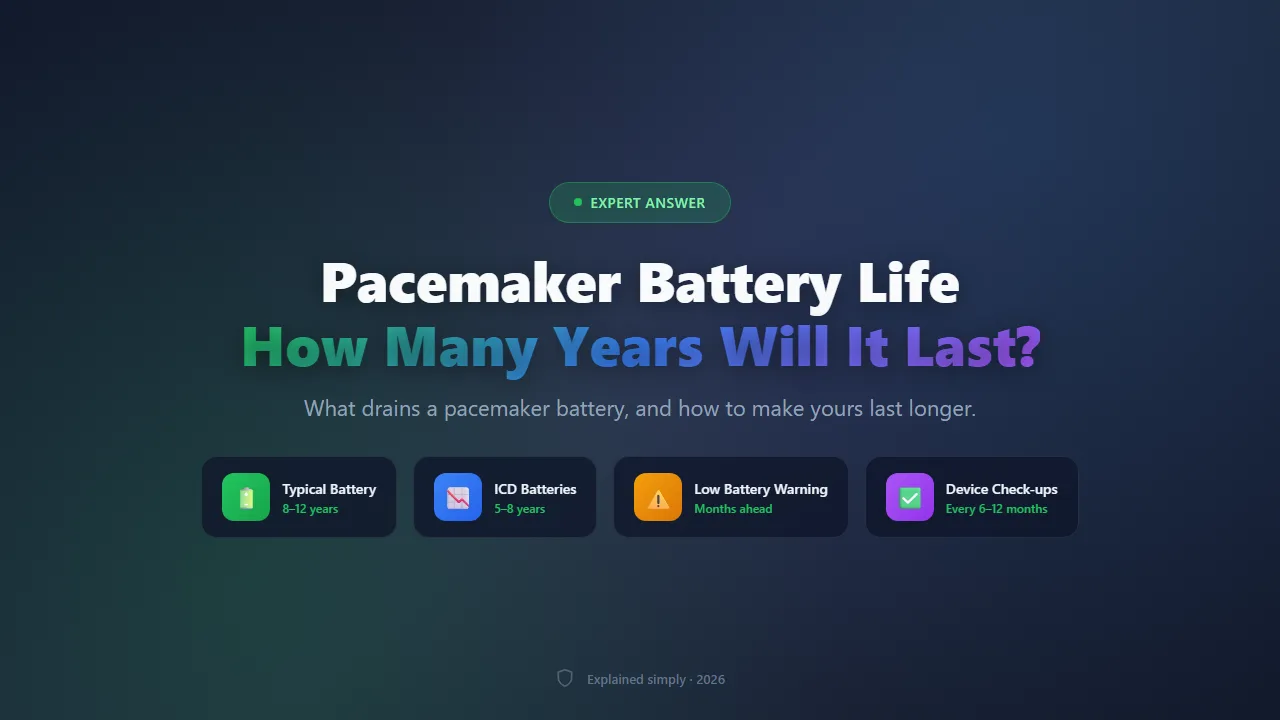
| Typical battery life | 8 to 12 years | 8 to 12 years |
| Cost in Bangladesh | Lower | Higher |
| Best suited for | Atrial fibrillation with slow rate, simple bradycardia | Heart block with normal sinus rhythm |
So Which One Do You Need?
The honest answer is that it depends on your rhythm problem, not on preference. Here is the general thinking cardiologists use:
A single-chamber pacemaker may be right for you if:
- You have permanent atrial fibrillation with a slow heart rate. In this condition the top chamber quivers constantly, so there is no benefit in pacing it.
- Your main problem is simple slow rhythm in the lower chamber and your doctor wants the simplest solution.
- Budget is a strong concern and your condition allows the simpler option.
A dual-chamber pacemaker may be right for you if:
- You have heart block but your own natural atrial rhythm is still healthy.
- You are relatively young and active, so maintaining the natural chamber sequence matters for your daily energy.
- Tests show that single-chamber pacing would cause pacemaker syndrome, where uncoordinated beating causes dizziness, neck pulsing, or low blood pressure.
Your electrophysiologist will look at your ECG, Holter monitor results, and echocardiogram before recommending one. At Rhythm Care Ltd we always explain why we recommend a particular type before booking any surgery. If someone offers to implant a device without explaining the reason, ask questions.
Cost Comparison in Bangladesh
Price matters to most families, and we talk about it openly. Costs vary by hospital, brand, and model, but rough ranges are:
- Single-chamber pacemaker: roughly BDT 1.5 lakh to 3 lakh including the device and procedure
- Dual-chamber pacemaker: roughly BDT 3 lakh to 5.5 lakh including the device and procedure
Imported brands from Medtronic, Abbott, Boston Scientific, and Biotronik sit at different points in these ranges. For a full breakdown of current prices by brand and model, see our detailed page on pacemaker price in Bangladesh.
What If I Choose Wrong?
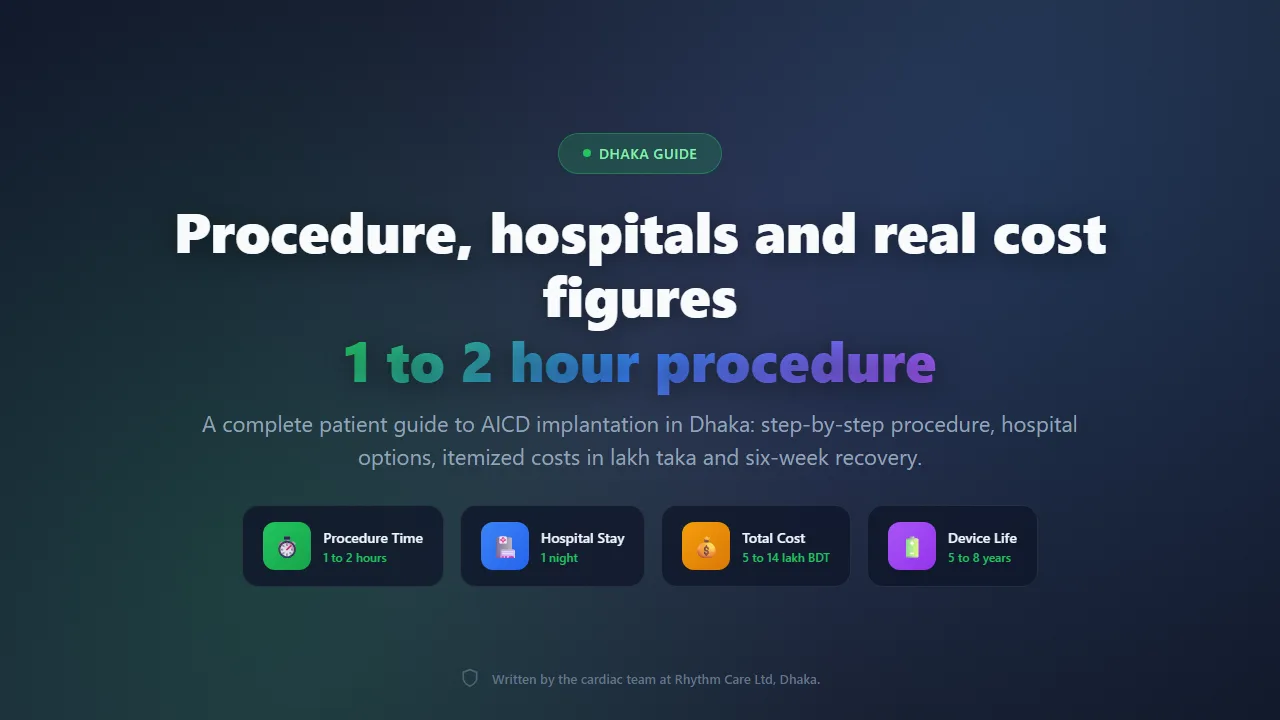
You do not really choose alone. Your cardiologist chooses with you based on evidence. And even if circumstances change later, upgrades are possible. For example, a patient whose rhythm problem evolves may have a second lead added or move to a more advanced device such as a CRT pacemaker or an ICD. Patients at risk of dangerous fast rhythms may need an ICD instead, and we explain those options on our ICD price in Bangladesh page.
Questions to Ask Before Your Implant
Bring these questions to your consultation:
- Which chamber of my heart has the rhythm problem?
- Do I still have a healthy natural rhythm in my upper chamber?
- Why are you recommending single-chamber or dual-chamber for me?
- What is the expected battery life of the specific model?
- What will the total cost be, including hospital stay?
- How soon can I return to normal activities?
A good doctor welcomes these questions. We encourage every family at Rhythm Care Ltd to write theirs down before the visit.
Recovery Is Similar for Both Types
Whichever device you receive, recovery follows the same broad pattern. Most patients go home within one or two days. You keep the incision dry for about a week and avoid heavy lifting with the implanted arm for four to six weeks. Follow-up checks happen at one month, then every six to twelve months to watch battery level and lead function.
Do Pacemakers Change How Your Heart Feels?
Many patients worry that a device-paced heartbeat will feel strange. In truth, most people stop noticing their heartbeat entirely. The device mimics your natural rhythm, and the electrical pulses are far too small to feel.
What patients do report in the first weeks is awareness of the small bump under the skin. It settles both physically and mentally within a month or two. Patients who move from single-chamber to dual-chamber pacing (or who are upgraded after pacemaker syndrome) often describe feeling noticeably better, with less neck pulsing and more steady energy. That difference is exactly why matching the device to your rhythm condition matters so much.
FAQ
Is a dual-chamber pacemaker always better?
No. For patients with permanent atrial fibrillation, a single-chamber device is often the smarter choice. More technology is not automatically better medicine.
Can a single-chamber pacemaker be upgraded later?
Yes. A second lead can usually be added if your condition changes and your veins allow it.
Does the extra lead make dual-chamber surgery riskier?
The risk stays low in experienced hands, but procedure time is longer and there is a small additional chance of lead-related issues over the years.
How do I know which one fits my budget?
Ask for a written quote covering the device, the procedure, and hospital stay. Our team provides itemized estimates during consultation.
—
Book a consultation at Rhythm Care Ltd, Dhaka and let our cardiac specialists tell you exactly which pacemaker your heart needs.





Leave a Comment