


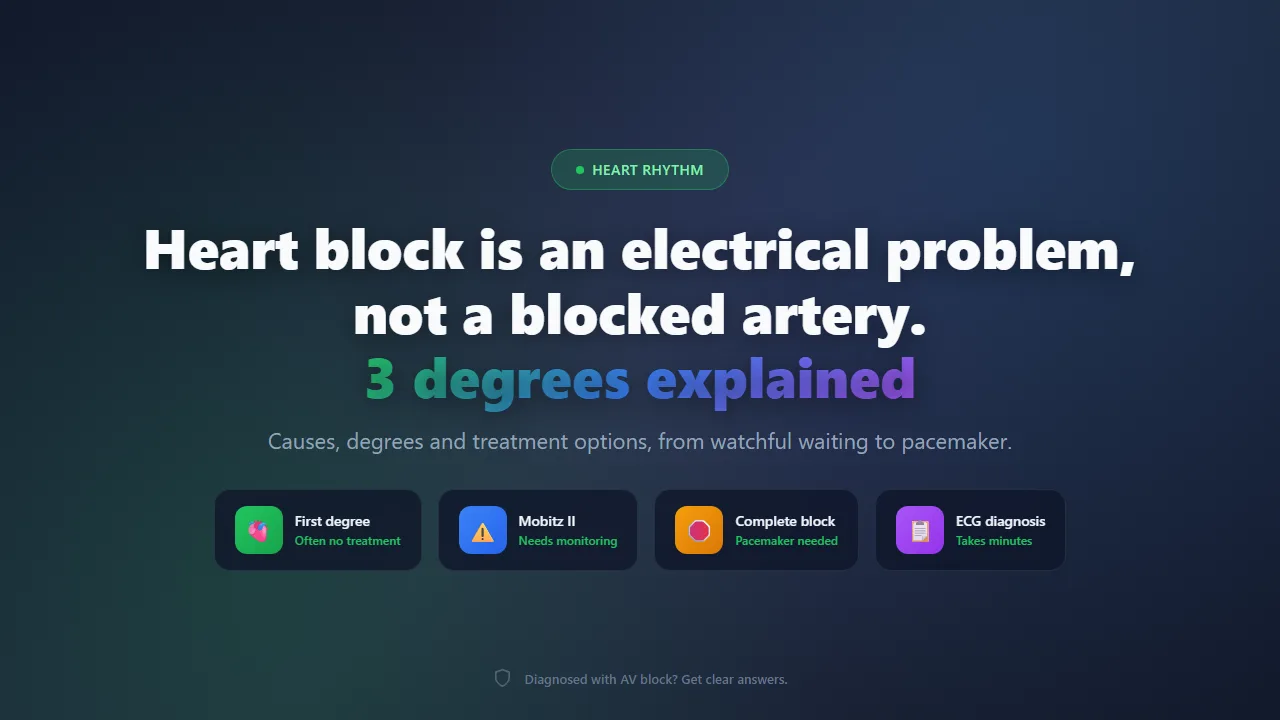
When an ECG report says “heart block,” most patients in Dhaka assume the worst: a blocked artery, an imminent operation, a life cut short. The reality is different, and often far more manageable. Heart block has nothing to do with the pipes of the heart. It is a delay or interruption in the electrical wiring, the system that tells the heart when to beat.
Understanding which type you have matters more than the scary name on the report, because the three degrees of heart block are three very different conditions with three very different answers.
How the heart’s electrical system works
Every heartbeat starts with an electrical impulse from the sinus node in the upper right chamber. The signal travels down to the AV node, then through the bundle branches into the ventricles, the main pumping chambers. That relay is what keeps the upper and lower chambers working together.
Heart block happens when the signal gets delayed or stopped somewhere along that relay, usually at or near the AV node. The upper chambers may fire normally while the lower chambers beat late, slowly, or on their own backup rhythm.
First-degree heart block
In first-degree block, the signal still gets through every time, it just takes longer than normal. On the ECG, the PR interval (the delay between the atrial beat and the ventricular beat) stretches past 0.20 seconds.
Most people with first-degree block have no symptoms at all. Many never know they have it. It shows up on routine ECGs, in athletes with strong vagal tone, in older adults, and as a side effect of certain medicines like beta blockers.
Treatment is usually nothing. If you have first-degree block with a normal heart rate and no symptoms, your cardiologist will likely just monitor it. Medicines that slow conduction may be adjusted if they’re the cause.
Second-degree heart block
Here the signal starts dropping some beats. There are two types, and they behave very differently.
Mobitz type I (Wenckebach): the delay grows a little longer with each beat until one beat drops entirely, then the cycle restarts. It’s common during sleep, in fit young people, and often needs no treatment at all if there are no symptoms.
Mobitz type II: beats drop suddenly without warning, and the dropped beats tend to increase over time. This one is taken seriously. It can progress to complete heart block, and it doesn’t usually improve on its own.
Symptoms of second-degree block include dizziness, unusual tiredness, breathlessness on exertion, or brief blackouts (syncope). If you’re getting these symptoms, the block isn’t just an ECG finding anymore, it’s affecting how much blood your heart delivers.
Third-degree (complete) heart block
The signal from the upper chambers never reaches the ventricles. A backup pacemaker lower in the heart takes over, beating at 20 to 40 times a minute, far too slow for normal life.
This is a serious diagnosis. Patients feel profound fatigue, confusion, breathlessness, fainting spells, and in some cases the heart pauses long enough to cause cardiac arrest. Complete block can follow a large heart attack, come from age-related scarring of the conduction system, result from infections like Lyme disease or Chagas, or appear after cardiac surgery. In older Bangladeshi patients, degenerative scarring of the AV node is the most common cause we see.
Complete heart block does not fix itself. Treatment means a pacemaker, and usually soon.
What causes heart block in the first place
- Age-related fibrosis of the conduction system (the most common cause)
- Heart attack damaging the conduction tissue
- Medicines: beta blockers, calcium channel blockers, digoxin, some antiarrhythmics
- Electrolyte problems, especially severe potassium disturbances
- Infections and inflammatory conditions, including rheumatic heart disease, still seen in Bangladesh
- Congenital heart block, present from birth in rare cases
- Post-surgical injury after valve repair or replacement
Some causes are reversible. If a medication is responsible, stopping or adjusting it may restore normal conduction. That’s one reason your cardiologist reviews your full medicine list before recommending a device.
Treatment options, degree by degree
First degree: observation, medicine review. No device.
Second degree, Mobitz I without symptoms: usually observation with periodic ECGs.
Second degree, Mobitz II, or any symptomatic block: pacemaker implantation. This is a small device placed under the skin below the collarbone, with wires (leads) that carry electrical signals to the heart and monitor its natural rhythm. When a beat is missed, the pacemaker fills in.
Third degree: pacemaker, essentially always.
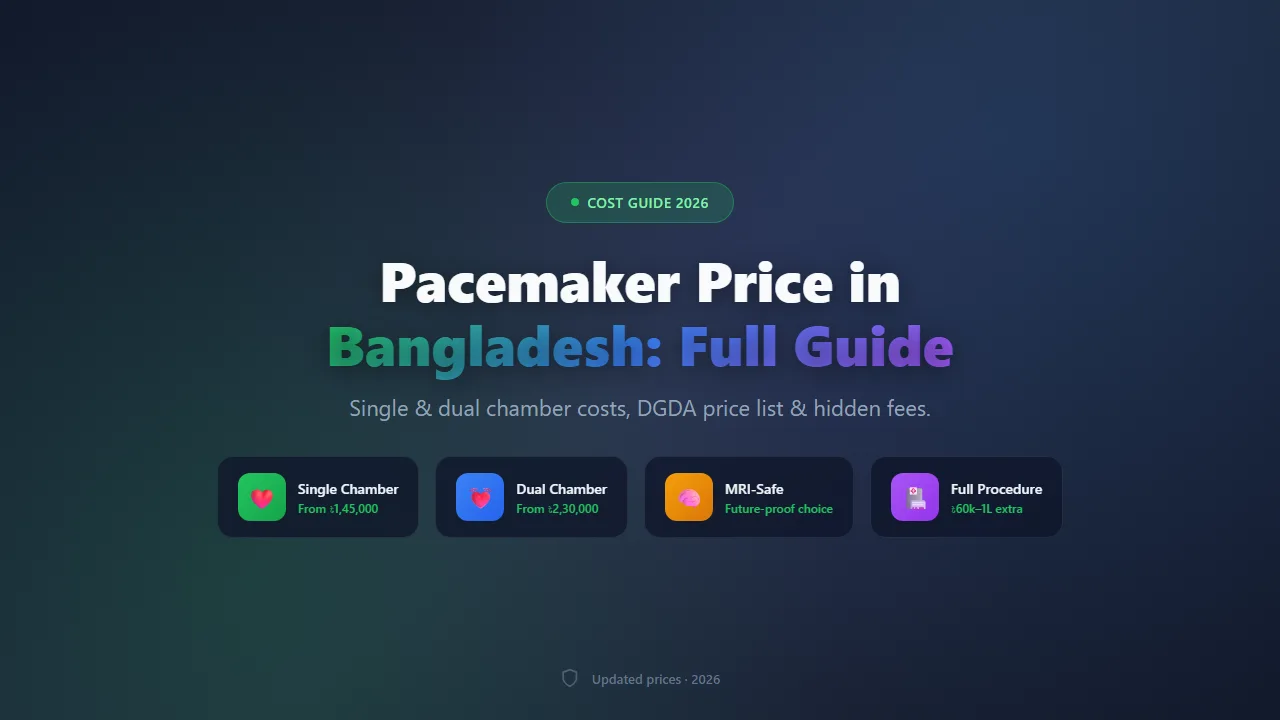
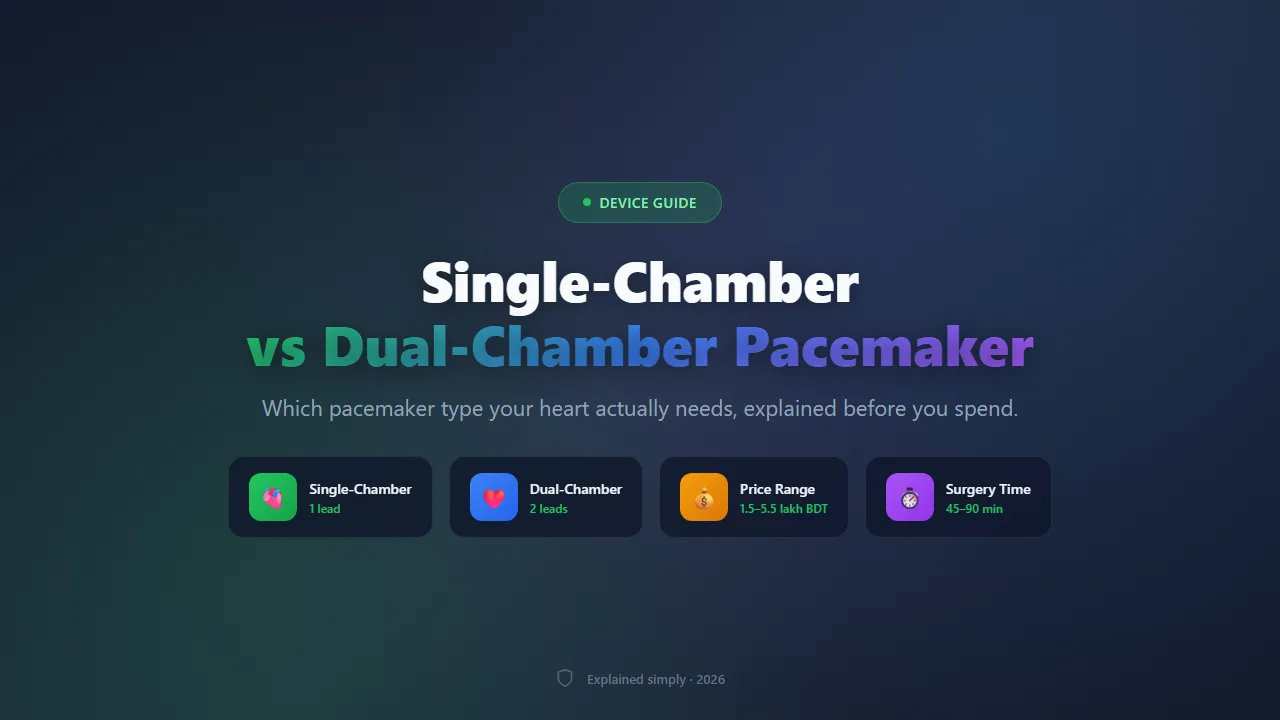
A pacemaker implantation in Bangladesh typically takes one to two hours under local anesthesia, with most patients walking the next day and going home within a couple of days. Device cost depends on type: single-chamber pacemakers generally run 1.5 to 3 lakh BDT, dual-chamber models 3 to 6 lakh BDT, with leadless options higher. Our full pacemaker price in Bangladesh guide breaks down the brands and what’s included.
Patients sometimes ask whether a pacemaker is “too much” at their age. The opposite is closer to the truth: complete heart block left untreated carries a real risk of sudden death, and a pacemaker is one of the most successful procedures in all of medicine. Most people who get one return to normal activity within weeks and live with the device for ten years or more before the battery needs replacing.
When to see a cardiologist
Take these symptoms seriously, especially in combination:
- Fainting or near-fainting, even once
- Heart rates consistently below 50 with fatigue
- Breathlessness or confusion out of proportion to your activity
- An ECG report mentioning “AV block” that nobody explained to you
Diagnosis starts with a simple ECG, often followed by a 24 or 48-hour Holter monitor to catch blocks that come and go.
Rhythm Care Ltd is a cardiac clinic in Dhaka specializing in rhythm disorders and pacemaker care, including patients with heart block. If you or a family member has been diagnosed with any degree of AV block and want a clear answer about whether treatment is needed, book a consultation or call +880 1819-227038.
FAQ
Can heart block go away on its own?
First-degree and Mobitz I block often stay stable for years and sometimes reverse if a medication was the cause. Mobitz II and complete block do not reverse on their own.
Is heart block the same as a blocked artery?
No. A blocked artery is a plumbing problem treated with stents or bypass. Heart block is an electrical problem, treated with a pacemaker when severe.
Can I live a normal life with a pacemaker for heart block?
Yes. Most patients return to work, travel, and exercise within weeks. The main restrictions are for the first four to six weeks while the leads settle.




Leave a Comment