
![final-logo[1]](https://rhythmcareltd.com/wp-content/uploads/elementor/thumbs/final-logo1-scaled-e1746056972397-scaled-ruqy3bwsz2r7w21yid55zivnvu9pr54am1hccjtohw.webp "final-logo[1]")


If you or a family member has been told you need a pacemaker, one of the first questions that comes to mind is usually the most practical one: what will this actually cost in Bangladesh?
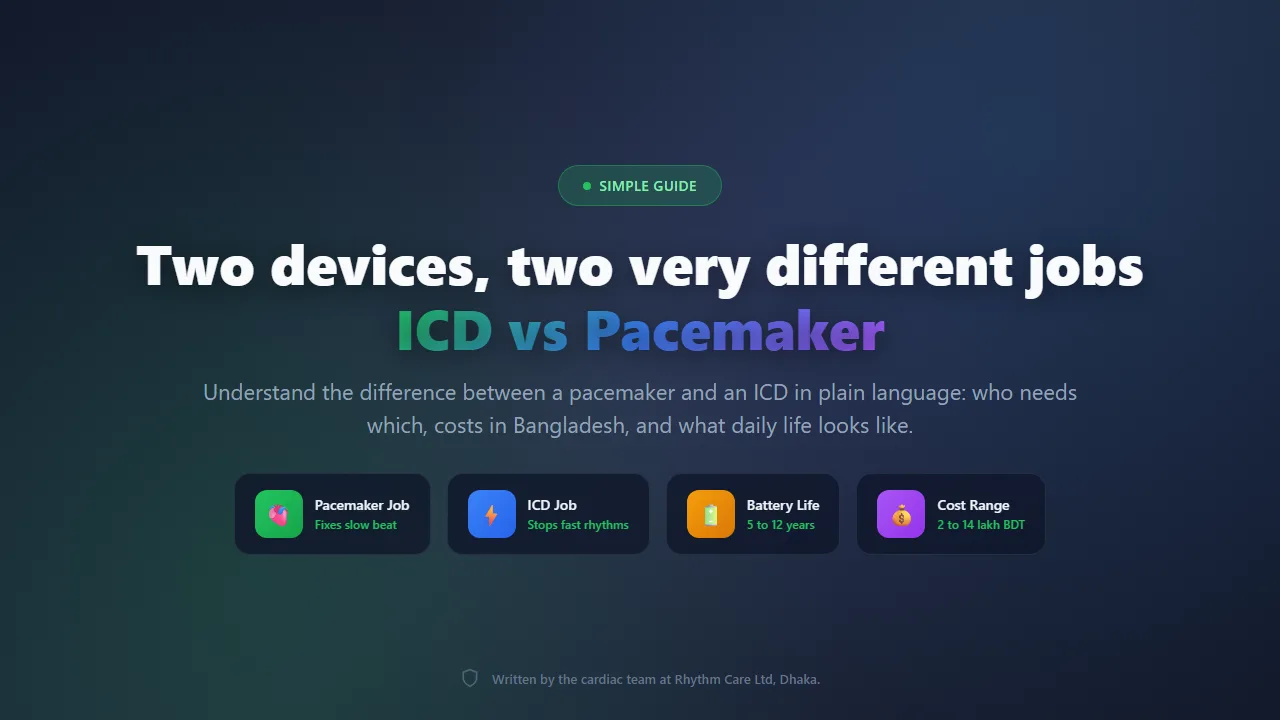
The short answer: a pacemaker procedure in Bangladesh typically runs from around BDT 1,50,000 to BDT 3,50,000 for the device plus surgery, depending on the type of device and where it’s implanted. Advanced devices like CRT or defibrillator combinations can go well above BDT 10,00,000. But those numbers only make sense once you understand what you’re paying for, so let’s break it down properly.
What determines pacemaker price in Bangladesh
Three things drive the final bill:
- The device itself. This is the biggest chunk by far. A basic single-chamber pacemaker costs less than a dual-chamber one, and MRI-conditional models cost more than standard ones.
- The procedure and hospital stay. Surgeon fees, cath lab charges, anesthesia, and usually 1 to 3 nights in hospital.
- Tests before and after. ECG, echo, blood work before implantation, and follow-up device checks afterward.
When hospitals quote a “package price,” read carefully. Some quote around BDT 65,000 to 90,000 for the procedure alone, which sounds cheap until you realize the device isn’t included. Always ask whether a quoted price covers the device.
Pacemaker price list in Bangladesh (2026)
Here are the DGDA-approved prices for Abbott pacemakers, one of the most commonly implanted brands in Bangladesh:
| Model | Type | Approximate price |
|---|---|---|
| Endurity Core PM-1152 | Single chamber | BDT 1,45,000 |
| Endurity MRI PM-1172 | Single chamber, MRI-safe | BDT 1,45,000 |
| Endurity Core PM-2152 | Dual chamber | BDT 2,30,000 |
| Endurity MRI PM-2172 | Dual chamber, MRI-safe | BDT 2,90,000 |
| Assurity MRI PM-2272 | Dual chamber, MRI-safe | BDT 3,35,000 |
On top of the device, budget roughly BDT 60,000 to 1,00,000 for the implantation procedure, hospital stay, and pre-operative tests. So a realistic all-in figure is about BDT 2,00,000 to 4,00,000 for most patients.
Single chamber vs dual chamber: which do you need?
This choice affects price more than anything else, so it helps to understand the difference.
A single-chamber pacemaker uses one wire in one heart chamber. It’s the simpler and cheaper option, and it works well for certain rhythm problems.
A dual-chamber pacemaker uses two wires and coordinates the upper and lower chambers of the heart, which produces a more natural heartbeat. It costs more, but for many patients it’s the better long-term choice because it keeps the heart’s natural pumping sequence intact.
Which one is right for you depends entirely on your specific rhythm disorder. That’s a decision for your electrophysiologist, not a cost decision alone. If a dual-chamber device meaningfully improves your heart function, the extra BDT 80,000 or so is usually worth it.
Is an MRI-safe pacemaker worth the extra cost?
MRI-conditional pacemakers cost more upfront, but here’s something worth thinking about: most people with a pacemaker will need an MRI at some point in their life, whether for the spine, brain, or joints. Older pacemakers make MRI scans complicated or impossible.
Given that the price gap between standard and MRI-conditional Abbott models can be small (the single-chamber MRI model listed above costs the same as its non-MRI version), we generally recommend asking for an MRI-conditional device if your budget allows. Your future self will thank you.
How long will the money last? Battery life explained
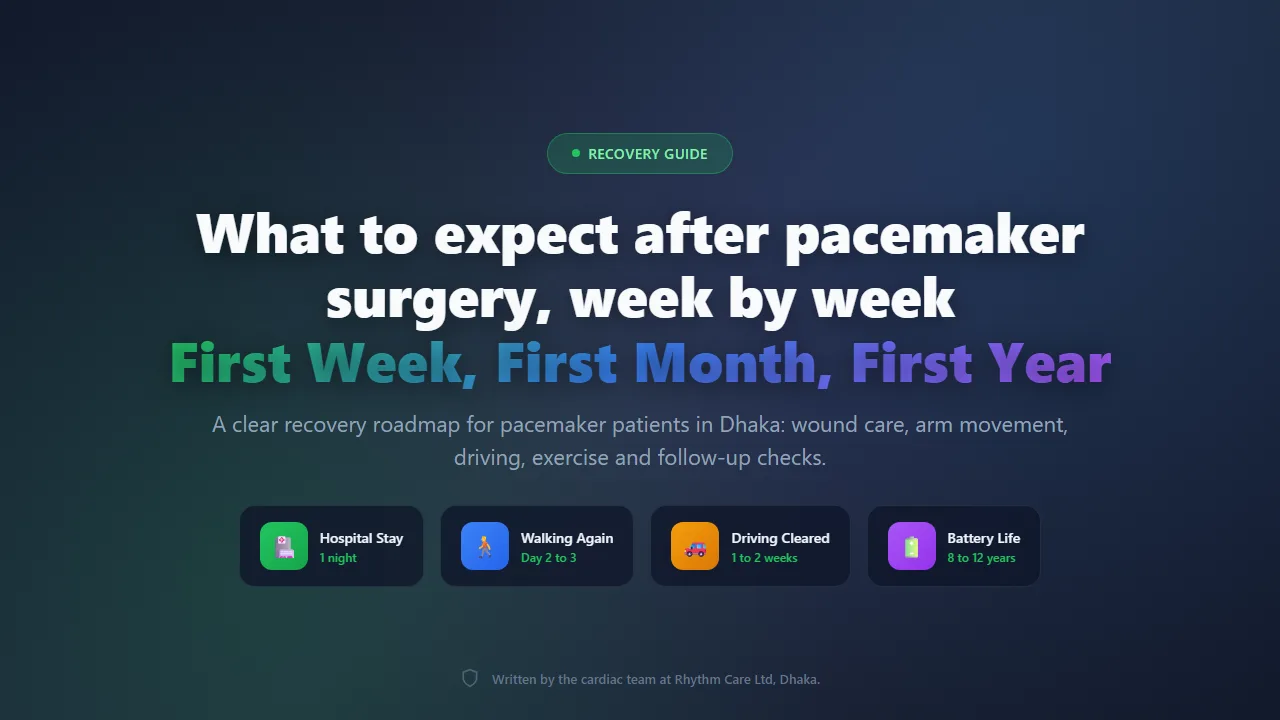
A pacemaker battery typically lasts 8 to 12 years. When it runs low, the generator (not the wires) gets replaced in a smaller procedure. Budget for a replacement device down the road, though many newer models stretch battery life further than older ones did.
Regular follow-up checks catch battery decline early, so never skip them. Most of these check-ups take under 30 minutes.
Where can you get a pacemaker implanted in Dhaka?
Major cardiac centers in Dhaka include Evercare, United, Labaid, Ibrahim Cardiac, Square, and the National Heart Foundation. Prices vary between them, sometimes significantly for the same device.
One practical tip: since device prices are now DGDA-regulated and published, the device cost should be similar anywhere. What varies more is the procedure fee and package structure. Ask for an itemized estimate before committing.
Does insurance cover pacemakers in Bangladesh?
Coverage is limited but improving. Some corporate health plans and a few private insurers cover part of the cost. Government employees often have coverage through their health schemes. Check your policy documents specifically for “implantable device” coverage rather than assuming hospitalization coverage includes it.
Questions to ask before you pay
Before agreeing to any package, ask:
Is the device price separate from the procedure fee?
Which exact model will be implanted, and is it on the DGDA approved price list?
Is the device MRI-conditional?
What’s included in the hospital stay, and what would trigger extra charges?
How soon after surgery are the follow-up checks, and what do they cost?
Getting these answers in writing protects you from surprise bills and makes sure you’re comparing like with like across hospitals.
A final word
Pacemaker surgery sounds frightening, and the price tags floating around online don’t help. But for most patients in Bangladesh, a reliable dual-chamber pacemaker with full implantation lands somewhere between BDT 2,50,000 and 4,00,000, and it can add years of active life.
If you want a clear, no-pressure assessment of which device fits your condition and budget, our team at Rhythm Care Ltd specializes in exactly this. We’re an authorized service provider for Abbott cardiac devices in Bangladesh and handle everything from consultation to lifelong follow-up.
Book an appointment or call us at +880 1819-227038. Bring your reports. We’ll walk you through the options honestly.




Leave a Comment