
![final-logo[1]](https://rhythmcareltd.com/wp-content/uploads/elementor/thumbs/final-logo1-scaled-e1746056972397-scaled-ruqy3bwsz2r7w21yid55zivnvu9pr54am1hccjtohw.webp "final-logo[1]")

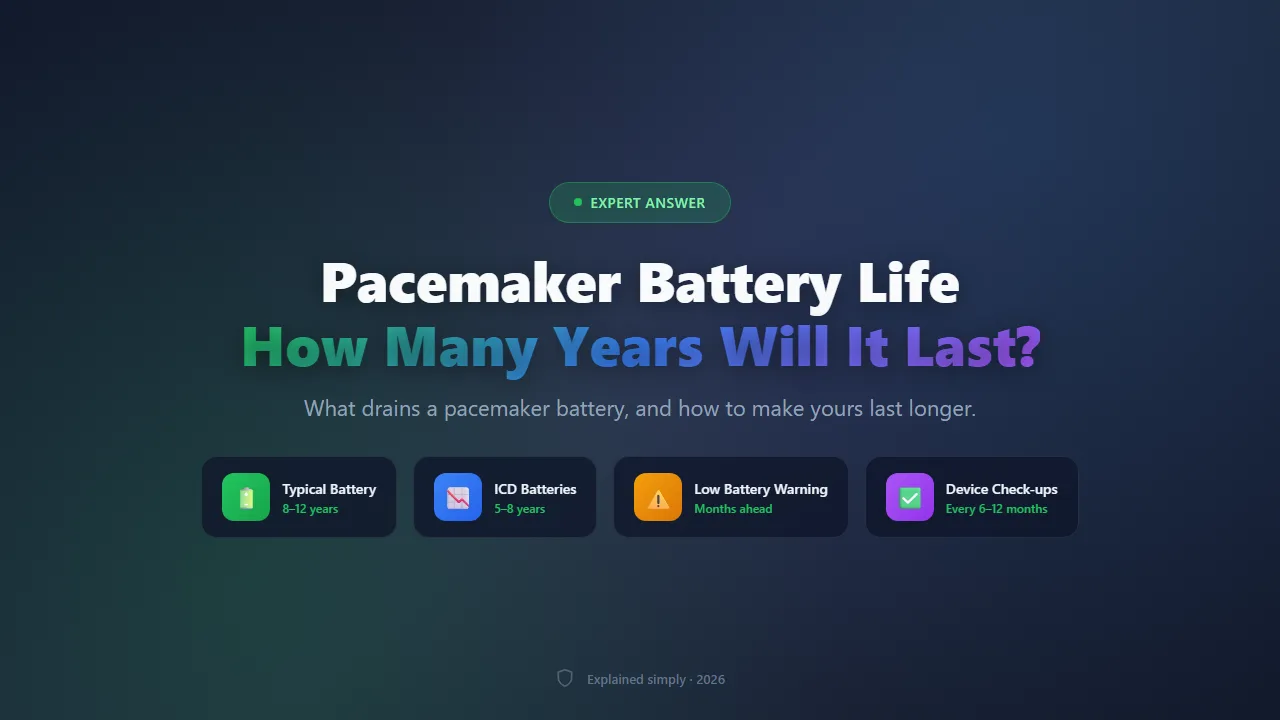
One of the first questions patients ask when a pacemaker is recommended is: how long will it last? It is a fair question. A pacemaker is an expensive device, and nobody wants repeat surgery every few years. The short answer from cardiac experts: most modern pacemakers last 8 to 12 years, and some reach 14 years or more. But battery life is not fixed. Your device settings, your heart condition, and how much pacing you need all play a role.
In this article we explain what drains a pacemaker battery, how you can make it last longer, and how you will know when replacement time is near. We write it the way our specialists at Rhythm Care Ltd in Dhaka explain it during consultations.
The Short Answer
| Device type | Typical battery life |
|---|---|
| Single-chamber pacemaker | 10 to 14 years |
| Dual-chamber pacemaker | 8 to 12 years |
| CRT pacemaker (biventricular) | 6 to 10 years |
| ICD (defibrillator) | 5 to 8 years |
Notice the pattern: the more leads and the more work the device does, the shorter the battery life. An ICD holds a larger battery but also delivers high-energy shocks that drain it faster. If your doctor has mentioned an ICD instead of a standard pacemaker, our page on ICD price in Bangladesh covers those devices separately.
Why Pacemaker Batteries Last So Long
A pacemaker uses very little electricity per beat. Each pacing pulse is measured in microjoules, thousands of times less energy than a phone screen uses in a second. The battery inside is a lithium-iodine cell designed to release power slowly and predictably over many years. There is no charging and nothing to refill. When the battery finally runs low, the whole generator (battery plus circuit) gets replaced in a minor procedure.
Modern devices also pace only when needed. If your own heart beats normally for part of the day, the pacemaker sits quiet and watches. This on-demand pacing saves large amounts of energy compared with older devices that paced every single beat.
What Uses Up Battery Faster?
Some batteries die at year 7 while others pass year 13. Here is why:
1. Percentage of pacing. A patient whose heart needs pacing 90 percent of the day drains the battery much faster than someone paced 20 percent of the time. Your device check reports this percentage at every visit.
2. Pacing output settings. The electrical strength of each pulse (called output) is set with a safety margin above the minimum your heart needs. If your threshold is low and stable, your doctor can safely lower the output and extend battery life by years. This is one of the biggest factors within our control.
3. Number of leads. Every lead carries its own pulses. Dual-chamber devices pace two chambers and use more energy than single-chamber ones.
4. Extra features. Features like rate response (pacing that speeds up with activity), automatic threshold tracking, remote monitoring, and anti-tachycardia functions all consume some power. They are worth it when needed, but they are not free.
5. Lead problems. A damaged or marginally positioned lead may need higher output to capture the heart, quietly eating battery. Regular follow-up catches this early.
6. Extreme heat. Long exposure to very high temperatures can affect battery chemistry. In Bangladesh’s climate, avoid leaving device-related documents and obviously the implanted site itself exposed to extreme heat for prolonged periods; practical steps like staying hydrated and avoiding peak-afternoon exertion matter more than people assume.
How Will You Know When the Battery Is Low?
You do not have to guess. Pacemakers report their exact battery status at every check-up through a simple wireless wand or remote monitor. The battery passes through stages:
- Normal: full expected function
- Elective replacement indicator (ERI): the battery has months of reserve left. Time to schedule replacement
- End of service (EOS): replacement should happen promptly
The ERI stage exists precisely so no patient is ever surprised. Between check-ups, many modern devices send data automatically over mobile networks to your clinic.
Some patients notice signs themselves as the battery ages: slower pulse than their set minimum rate, return of old symptoms such as dizziness or fatigue, or unusual hiccups in rare cases. Never wait for symptoms though. Scheduled checks catch low battery long before it affects you.
Can I Check My Pacemaker Battery at Home?
Many current models come with a home transmitter or smartphone app. You place the monitor near the device, usually overnight, and it sends battery status, lead readings, and rhythm reports to your doctor. Ask about this option at implantation. At Rhythm Care Ltd we set up remote monitoring for suitable patients so problems surface between visits rather than at them.
How Battery Life Has Improved Over the Generations
It is worth knowing how far the technology has come, especially if an older relative had a pacemaker decades ago. Pacemakers implanted in the 1980s and early 1990s often lasted only 5 to 7 years, and some needed replacement within 4. Devices were larger, batteries were less efficient, and nearly all of them paced every single beat whether the heart needed it or not.
Three improvements changed the picture:
- On-demand pacing. Modern devices sense your own heartbeat and pace only when it falters, which can cut energy use dramatically
- Automatic output adjustment. The device measures how much energy your heart actually needs and uses just above that level, instead of a fixed generous output
- Better battery chemistry. Lithium-iodine cells store more energy in a smaller, more predictable package
The practical result for a patient implanted in Dhaka today is fewer replacement surgeries across a lifetime. Someone who receives a first pacemaker at 65 might need only two or three generator changes over the rest of their life, compared with five or six a generation earlier.
What Happens When Replacement Is Needed?
Battery replacement is a smaller procedure than the original implant:
- Only the generator under the skin is changed. The leads stay in place if they test healthy
- Local anesthesia, a small incision over the old scar, new device connected, wound closed
- Usually done as a day procedure or one night in hospital
- Recovery is quicker because there is no new lead placement
Cost is lower than a fresh implant since you pay mainly for the new generator and procedure. Our article on pacemaker battery replacement in Bangladesh covers the timing and costs in detail.
Practical Tips to Extend Your Battery Life
- Attend every scheduled device check. Small setting adjustments add years
- Ask your doctor whether your output settings can be optimized. Safe lowering of output is one of the most effective ways to save battery
- Treat lead health seriously. Avoid aggressive pulling or repeated trauma over the implanted area, which can damage leads and force higher outputs
- Keep your weight, diabetes, and blood pressure managed. A healthier heart often paces less
- Keep the device card updated and carry it. Any procedure involving electrical equipment (some surgeries, MRI scans on MRI-compatible systems) needs correct device settings, which protects both you and the hardware
FAQ
Does a pacemaker battery give warning before failing?
Yes. Devices flag an elective replacement indicator months in advance, detected at routine check-ups or via remote monitoring.
Can I charge my pacemaker?
No. The battery is sealed inside the device and cannot be recharged. Standard pacemakers are replaced, not charged.
Does my heart depend completely on the pacemaker forever?
Not necessarily. Some patients’ own rhythm improves over time and they need less pacing, which extends battery life. The device adapts automatically.
What happens if I miss my check-up for two years?
The device keeps working, but you lose the chance to optimize settings and detect issues early. Never stretch beyond your advised interval.
—
Curious how much battery life your specific situation allows? Book a device check at Rhythm Care Ltd, Dhaka and get answers based on your actual device data.






Leave a Comment