
![final-logo[1]](https://rhythmcareltd.com/wp-content/uploads/elementor/thumbs/final-logo1-scaled-e1746056972397-scaled-ruqy3bwsz2r7w21yid55zivnvu9pr54am1hccjtohw.webp "final-logo[1]")

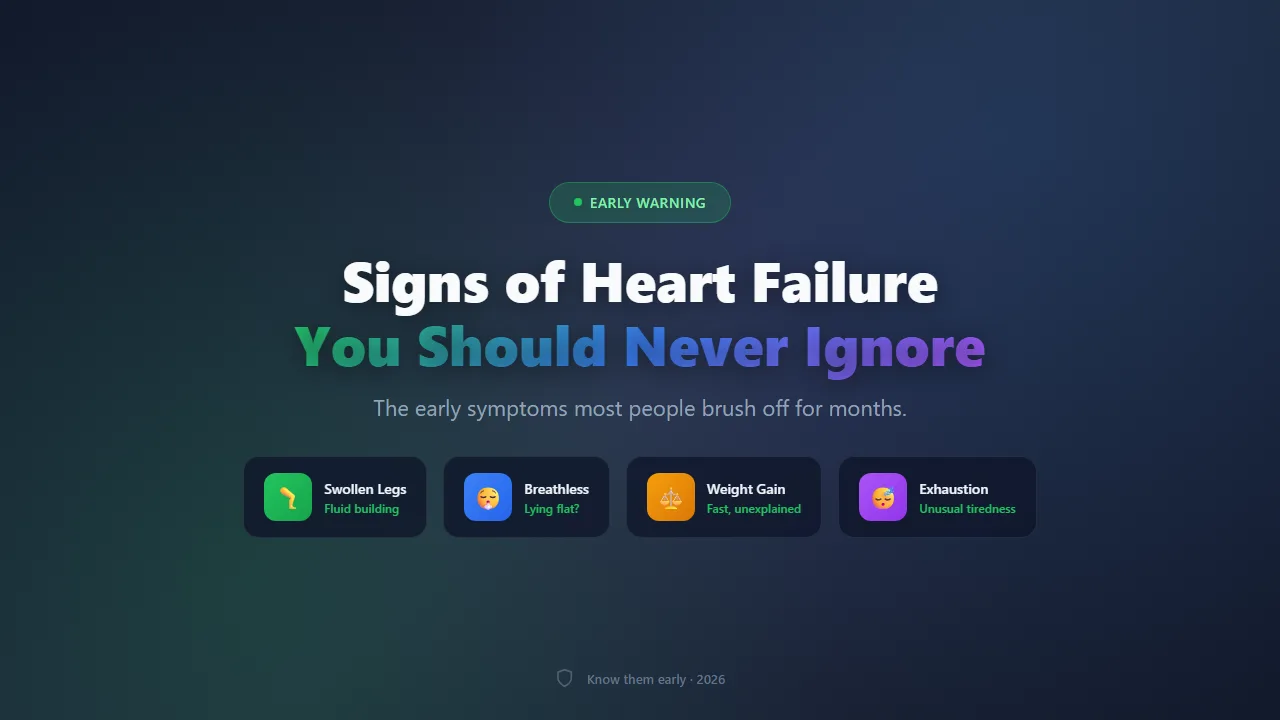
Heart failure rarely announces itself all at once. It usually starts quietly: a little more tiredness than usual, shoes feeling tight by evening, needing an extra pillow to breathe comfortably at night. Because these changes creep in slowly, many people in Bangladesh attribute them to age, heat, or being out of shape, and only see a doctor when the situation becomes severe.
Catching heart failure early makes a real difference. Treatment started before the heart remolds badly works better and costs less. Here are the warning signs worth knowing, and when each one deserves a same-week appointment versus a trip to the emergency room.
The classic early symptoms
1. Breathlessness during ordinary activity
The most common first sign. Climbing the same staircase that used to be easy now requires stopping. Walking to the market leaves you winded. In early heart failure, fluid backs up into the lungs during exertion, making the lungs stiffer and breathing harder work.
Breathlessness lying flat is an especially telling version. If you need two or three pillows to sleep comfortably, or you wake at night gasping and need to sit upright for several minutes, your heart may be struggling to handle blood returning to it in that position. Cardiologists call this orthopnea and paroxysmal nocturnal dyspnea, and both deserve prompt evaluation.
2. Swelling in the feet, ankles and legs
When the right side of the heart cannot keep up, fluid collects in the lowest parts of the body. Press a thumb into the skin over the shinbone for ten seconds; if a visible dent remains, that is pitting edema. Early on, the swelling appears by evening and improves overnight with leg elevation.
Not every swollen ankle is heart failure; kidney disease, liver disease, vein problems and certain blood pressure medicines also cause it. But new or worsening swelling combined with breathlessness should never be dismissed.
3. Persistent tiredness and weakness
A failing heart delivers less blood to muscles and organs, so ordinary tasks drain you. This symptom is easy to ignore because it has no dramatic quality. Take it seriously when fatigue comes alongside any other sign on this list, or when it represents a clear change from your normal capacity.
4. Unexplained weight gain
Fluid retention shows up on the scale before it shows up visibly. Gaining more than two kilograms within three days without any change in eating points toward fluid buildup rather than fat. Many cardiologists ask heart failure patients to weigh themselves daily for exactly this reason; the scale often warns days before symptoms flare.
5. Frequent coughing or wheezing, worse when lying down
Fluid in the lungs can irritate airways and produce a persistent cough, sometimes with pink-tinged frothy sputum in more advanced stages. People often mistake this for asthma or a lingering cold, particularly when it worsens at night.
6. Reduced appetite and early fullness
Fluid accumulating in the liver and gut causes nausea, poor appetite, and a feeling of fullness after a few bites. Families sometimes notice this as unexplained weight loss despite swelling elsewhere.
7. Needing to urinate more at night
Lying flat returns pooled leg fluid to circulation, and the kidneys process it overnight. Waking multiple times to urinate, when this is new for you, fits the overall picture.
Symptoms that mean emergency care now
Some signs indicate acute decompensation, where the lungs are flooding. Go to an emergency department immediately if there is:
- Severe breathlessness at rest or a sudden struggle to breathe
- Coughing pink, frothy sputum
- Chest pain or pressure accompanying the breathlessness
- Fainting or near-fainting
- Confusion or unusual drowsiness in someone known to have heart trouble
These situations can progress quickly. Do not wait until morning or self-medicate.
Who is most at risk
Heart failure develops more often in people with:
- High blood pressure over many years
- Diabetes
- Prior heart attack or known coronary artery disease
- Valve disease
- Chronic kidney disease
- A family history of cardiomyopathy
If you carry these risks, treat even mild versions of the symptoms above as signals worth investigating rather than background noise of daily life.
How doctors confirm the diagnosis
Evaluation is straightforward and available in Dhaka:
- History and examination, listening to the lungs and checking for edema and neck vein distension
- ECG for rhythm problems and evidence of strain or previous infarction
- Echocardiogram to measure ejection fraction, the central number guiding treatment
- Blood tests, including NT-proBNP, which rises when the heart is under strain
- Sometimes chest X-ray and coronary angiography depending on findings
None of this is exotic. Most patients get answers within a couple of visits.
Why early diagnosis pays off
Modern heart failure treatment, four classes of medicines titrated properly plus device therapy where indicated, slows progression, reduces hospital admissions, and extends life. The benefit is largest when treatment starts before severe remodeling sets in. Patients diagnosed early and followed regularly routinely avoid the cycle of repeated emergency admissions that defines untreated disease.
Frequently asked questions
What is the first sign of heart failure?
Usually breathlessness during ordinary activity or new swelling in the ankles and feet. Neither should be ignored if new or worsening.
Can heart failure symptoms come and go?
Yes, early symptoms often fluctuate, which is why people delay. A pattern over weeks still warrants evaluation.
Which test confirms heart failure?
An echocardiogram measuring ejection fraction is the central test, supported by ECG and NT-proBNP blood work.
Is swelling in one leg only a heart sign?
Usually not; one-sided swelling points more toward a vein problem or clot and needs urgent assessment for different reasons.
Can young people get heart failure?
Yes, particularly with cardiomyopathy, congenital disease, rheumatic valve disease or uncontrolled hypertension.
When to get checked in Dhaka
If two or more of the early symptoms above describe your last few months, book a cardiac evaluation this week rather than waiting to see whether things settle. Rhythm Care Ltd evaluates suspected heart failure with echocardiography, ECG and lab testing, then builds a treatment plan matched to your stage. Book an appointment and bring a list of your current medicines and any previous reports.







Leave a Comment