
![final-logo[1]](https://rhythmcareltd.com/wp-content/uploads/elementor/thumbs/final-logo1-scaled-e1746056972397-scaled-ruqy3bwsz2r7w21yid55zivnvu9pr54am1hccjtohw.webp "final-logo[1]")

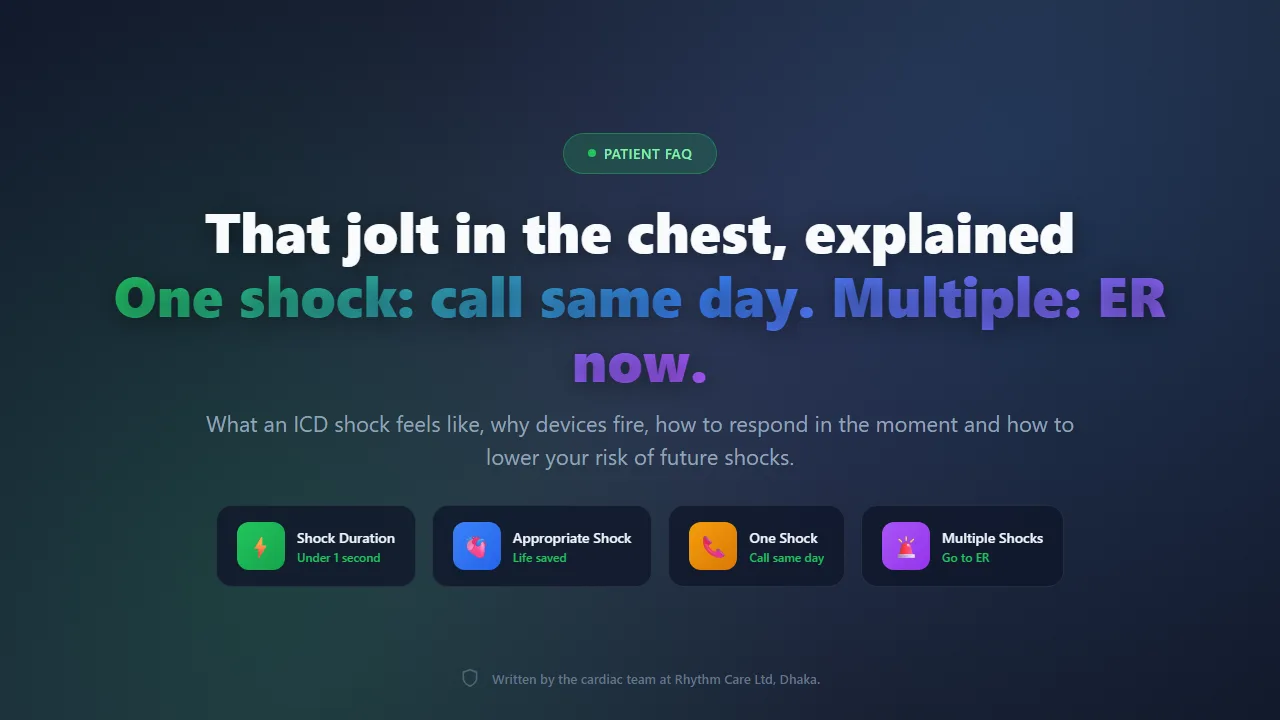
For most people with an implantable cardioverter defibrillator, the device sits quietly for years. Then one day it fires, and everything changes for a moment: a violent jolt in the chest, a flash of fear, and afterwards a hundred questions. Was that normal? Is something wrong with the device? Should I have gone to the hospital?
If you carry an ICD or care for someone who does, understanding shocks removes most of their terror. This guide explains what a shock actually feels like, the reasons devices fire, how to respond in the moment, and when a shock means calling your doctor versus going straight to emergency care.
What an ICD Shock Feels Like
Patient descriptions cluster into two very different experiences.
A defibrillation shock (for a dangerous fast rhythm) is commonly described as:
- A sudden, forceful kick or thump in the chest
- Being struck hard from inside; some compare it to being tackled
- A whole-body startle, sometimes with a brief jerk of the arms
The sensation lasts less than a second. What lingers is the emotional aftershock: racing heart from adrenaline, trembling, and often a few minutes of feeling shaken even though the dangerous rhythm itself was terminated instantly.
Some patients receive no warning at all because ventricular fibrillation causes near-immediate loss of consciousness. They faint during the rhythm, the ICD shocks them back, and they wake on the floor sore and confused, learning afterwards what happened.
Antitachycardia pacing (ATP) feels completely different. Many modern ICDs first try to stop a fast rhythm by pacing rapidly rather than shocking. Patients may feel a fluttering or tapping sensation for a few seconds, and often nothing at all. ATP silently terminates many episodes that would otherwise require a shock.
Why ICDs Fire: The Common Reasons
Devices do not fire randomly. Every shock corresponds to a detected rhythm meeting programmed criteria. The main categories:
1. Genuine dangerous rhythms (most common)
Ventricular tachycardia or ventricular fibrillation begins, the device treats it within seconds, and the shock saves your life. This is the system working exactly as designed. If you have heart muscle disease, prior infarction scarring, or an inherited arrhythmia syndrome, this is what the device exists for.
2. Atrial arrhythmias misread as dangerous
Rapid atrial fibrillation or atrial flutter can cross the rate threshold the device uses to define danger, especially if programming has not been optimized. Modern dual-chamber devices use algorithms to tell top-chamber from bottom-chamber rhythms, but no algorithm is perfect. Appropriate reprogramming usually solves this.
3. Lead problems
A lead fracture, insulation break, or loose connector generates electrical noise that the device interprets as a chaotic rhythm, triggering inappropriate shocks. Clues include multiple shocks without any sensation of palpitations beforehand. This needs urgent attention; bring forward your device check.
4. Non-cardiac signals
Rarely, electromagnetic interference or myopotentials (muscle noise) fool the device. Strong magnetic fields, certain power tools held against the chest, or faulty wiring can contribute. Everyday household electronics almost never cause this.
The only way to know which category applies to you is device interrogation: connecting a programmer wand over the implant and downloading the stored electrograms. Every shock deserves one.
What To Do During and Immediately After a Shock
If you feel one shock and then feel otherwise well:
- Sit down somewhere safe for 10 to 15 minutes.
- Call your clinic or doctor’s number the same day and describe what happened. Most clinics arrange interrogation within 24 hours.
- Do not drive until reviewed.
If you feel repeated shocks (two or more):
- Go immediately to the nearest emergency department. Multiple shocks can mean an ongoing arrhythmia storm or a lead problem, both needing same-hour care.
If you find someone unconscious after a collapse and they wake up:
- Take them for same-day device review regardless of how recovered they seem. The event history stored in the device tells the real story.
If someone receives shocks and stays unresponsive:
- Call an ambulance, begin CPR if trained, and continue until help arrives. Rarely, shocks fail to convert a rhythm; CPR bridges the gap.
One more practical point: family members sometimes fear touching a patient during a shock. They cannot be harmed; the energy travels between device and heart, not outward through skin.
How Often Is Normal?
There is no “normal” number of appropriate shocks beyond zero being ideal. Real-world data helps set expectations:
- Roughly half of ICD patients never receive any shock over five years, thanks to medicines, ablation, and antitachycardia pacing preventing them.
- Patients who do receive shocks typically average well under one per year.
- Multiple shocks within days or weeks are never routine and always warrant prompt review of both rhythm control and device settings.
Frequent appropriate shocks signal that the underlying arrhythmia is poorly controlled, which pushes your cardiologist toward medication adjustments, catheter ablation, or reprogramming, not simply accepting the status quo.
Reducing Your Future Shock Risk
Patients are not helpless bystanders to their own device:
- Take every prescribed medicine daily. Beta-blockers and antiarrhythmics cut shock rates substantially. Skipping doses after months of quiet is a classic route back into arrhythmia.
- Fix potassium and magnesium. Dehydration from heat, vomiting, diarrhoea, or diuretics shifts electrolytes and provokes rhythms. In Dhaka summers, this matters.
- Attend every scheduled check. Battery decline and lead wear show up on interrogation long before symptoms.
- Report palpitations and fainting, even mild ones, between visits.
- Manage fever aggressively if you have Brugada syndrome, and avoid excessive alcohol if advised.
The Emotional Side Nobody Mentions
Anxiety after a shock is nearly universal and worth addressing openly. Some patients develop a genuine fear of their own chest. Sleep suffers, activity shrinks, and quality of life drops despite excellent physical protection. Tell your cardiologist about this too. Counselling, patient support groups, and sometimes short-term medication all help, and clinics that treat only the device while ignoring the mind leave half the job undone.
Keeping a Shock Diary
After any event, write down four things while memory is fresh:
- Time and activity. What were you doing in the hour before? Walking, sleeping, arguing, working in heat?
- Sensation beforehand. Any pounding heartbeat, dizziness, or warning flutter?
- Number of shocks felt, and whether consciousness was lost.
- How you felt afterwards: chest soreness is common and harmless; breathlessness or ongoing palpitations are not.
This diary transforms your follow-up visit. The stored electrograms show what happened electrically; your notes show what it meant for your daily life, and together they guide whether medicines, ablation, or reprogramming comes next. Bring the diary to every appointment, not just after shocks.
Frequently Asked Questions
Does a shock damage my heart?
No. Therapeutic shocks briefly reset the rhythm; the heart muscle tolerates them well. Repeated inappropriate shocks deserve investigation mainly because of what they reveal, not tissue harm.
Will I know before a shock comes?
Sometimes: a pounding or racing heartbeat for seconds. With ventricular fibrillation, most patients black out before sensing anything.
Can I stop the device from shocking me?
Never attempt this yourself. Magnets suspend therapy and belong strictly in hospital hands under supervision.
My father got three shocks last month. Should the device be replaced?
Not necessarily. Three shocks mean his rhythm control needs revisiting; the device likely performed correctly. Interrogation records will clarify.
Get Your Device Reviewed Properly
Any shock, any doubt, any question about your ICD deserves answers from specialists who read device data every day. Rhythm Care Ltd in Dhaka provides full device interrogation and adjustment. Book a check at /appointment/.






Leave a Comment